Simon John Godsill (born 2 December 1965) is professor of statistical signal processing at the University of Cambridge, and a professorial fellow at Corpus Christi College. He is also a member of the Centre for Science and Policy. His main area of research is Bayesian statistics and stochastic sampling methodologies, particularly particle filtering. == Education == Godsill obtained both undergraduate and Ph.D. degrees from the Department of Engineering at Cambridge University, whilst a member of Selwyn College. He obtained a first class degree in the Electrical and Information Sciences Tripos. The title of his 1993 Ph.D. thesis was "The Restoration of Degraded Audio Signals" and his Ph.D. supervisor was Peter Rayner, whom he shared with Michael Richard Lynch. == Career == Godsill has published over 250 articles in peer reviewed journals, along with the books Digital audio restoration: a statistical model based approach and Compressed sensing & sparse filtering. == Business interests == Godsill is currently a director of CEDAR Audio Ltd, a Cambridge-based company that applies Bayesian mathematics for purposes of noise reduction in audio data. In February 2005, the company received a Sci-Tech Academy Award (a 'Technical Oscar') for its services to the movie industry, and a stream of innovations appeared over the following years with corresponding recognition including induction into the Audio Technology Hall of Fame (2008), a Cinema Audio Society Award (2009). Godsill is also a director at Input Dynamics Ltd, a Cambridge-based company that applies Bayesian techniques to touch screen technology. Godsill is involved with the research effort at BMLL Technologies, a Cambridge spin-off working in the field of machine learning application in the financial sector.
ISLRN
The ISLRN or International Standard Language Resource Number is Persistent Unique Identifier for Language Resources. == Context == On November 18, 2013, 12 major organisations (see list below) from the fields Language Resources and Technologies, Computational Linguistics, and Digital Humanities held a cooperation meeting in Paris (France) and agreed to announce the establishment of the International Standard Language Resource Number (ISLRN), to be assigned to each Language Resource. Among the 12 organisations, 4 institutions constitute the ISLRN Steering Committee (ST) ADHO ACL Asian Federation of Natural Language Processing ST COCOSDA, International Committee for the Coordination & Standardisation of Speech Databases and Assessment Techniques ICCL (COLING) European Data Forum ELRA ST IAMT, International Association for Machine Translation Archived 2010-06-24 at the Wayback Machine ISCA LDC ST Oriental COCOSDA ST RMA, Language Resource Management Agency == Size and Content == The Joint Research Centre(JRC), the [European Commission]'s in-house science service, was the first organisation to adopt the ISLRN initiative and requested. 2500 resources and tools have already been allocated an ISLRN. These resources include written data (Annotated corpus, Annotated text, List of misspelled word, Terminological database, Treebank, Wordnet, etc.) and speech corpora (Synthesised Speech, Transcripts and Audiovisual Recordings, Conversational Speech, Folk Sayings, etc.) == Objectives == Providing Language Resources with unique names and identifiers using a standardized nomenclature ensures the identification of each Language Resources and streamlines the citation with proper references in activities within Human Language Technology as well as in documents and scientific publications. Such unique identifier also enhances the reproducibility, an essential feature of scientific work.
List of video editing software
The following is a list of video editing software. The criterion for inclusion in this list is the ability to perform non-linear video editing. Most modern transcoding software supports transcoding a portion of a video clip, which would count as cropping and trimming. However, items in this article have one of the following conditions: Can perform other non-linear video editing function such as montage or compositing Can do the trimming or cropping without transcoding == Free (libre) or open-source == The software listed in this section is either free software or open source, and may or may not be commercial. === Active and stable === === Inactive === == Proprietary (non-commercial) == The software listed in this section is proprietary, and freeware or freemium. === Active === === Discontinued === == Proprietary (commercial) == The software listed in this section is proprietary and commercial. === Active === === Discontinued ===
Autonomous things
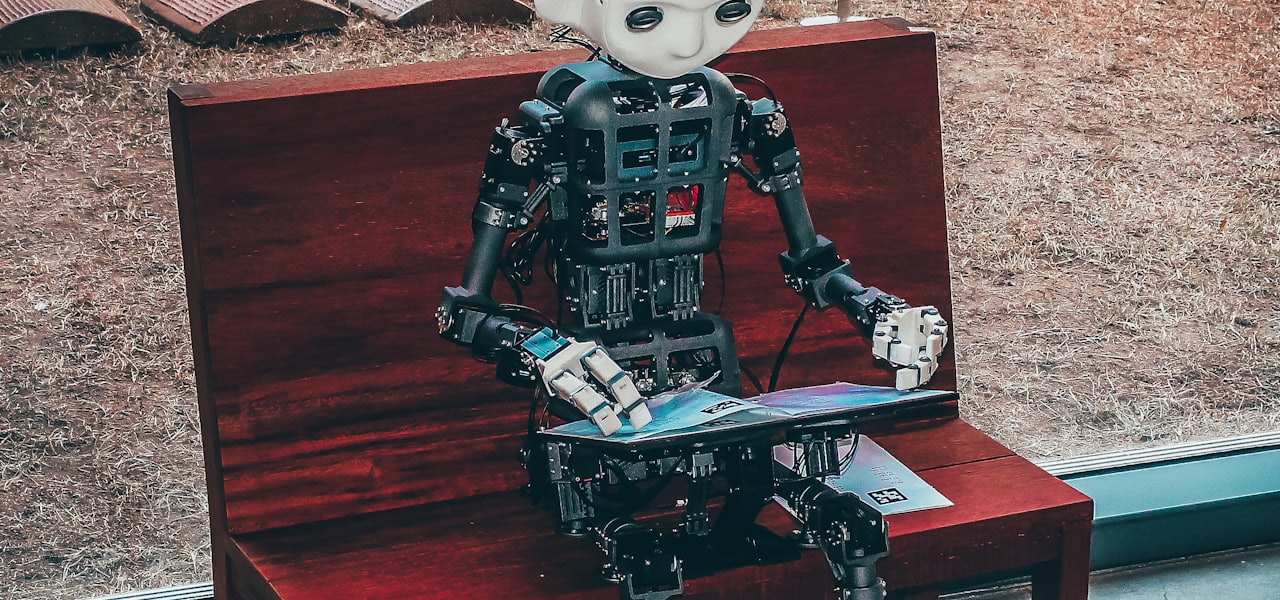
Autonomous things, abbreviated AuT, or the Internet of autonomous things, abbreviated as IoAT, is an emerging term for the technological developments that are expected to bring computers into the physical environment as autonomous entities without human direction, freely moving and interacting with humans and other objects. Self-navigating drones are the first AuT technology in (limited) deployment. It is expected that the first mass-deployment of AuT technologies will be the autonomous car, generally expected to be available around 2020. Other currently expected AuT technologies include home robotics (e.g., machines that provide care for the elderly, infirm or young), and military robots (air, land or sea autonomous machines with information-collection or target-attack capabilities). AuT technologies share many common traits, which justify the common notation. They are all based on recent breakthroughs in the domains of (deep) machine learning and artificial intelligence. They all require extensive and prompt regulatory developments to specify the requirements from them and to license and manage their deployment (see the further reading below). And they all require unprecedented levels of safety (e.g., automobile safety) and security, to overcome concerns about the potential negative impact of the new technology. As an example, the autonomous car both addresses the main existing safety issues and creates new issues. It is expected to be much safer than existing vehicles, by eliminating the single most dangerous element – the driver. The US's National Highway Traffic Safety Administration estimates 94 percent of US accidents were the result of human error and poor decision-making, including speeding and impaired driving, and the Center for Internet and Society at Stanford Law School claims that "Some ninety percent of motor vehicle crashes are caused at least in part by human error". So while safety standards like the ISO 26262 specify the required safety, there is still a burden on the industry to demonstrate acceptable safety. While car accidents claim every year 35,000 lives in the US, and 1.25 million worldwide, some believe that even "a car that's 10 times as safe, which means 3,500 people die on the roads each year [in the US alone]" would not be accepted by the public. The acceptable level may be closer to the current figures on aviation accidents and incidents, with under a thousand worldwide deaths in most years – three orders of magnitude lower than cars. This underscores the unprecedented nature of the safety requirements that will need to be met for cars, with similar levels of safety expected for other Autonomous Things.
Advanced automation functions
In automation production technology the actions performed by an automated process are executed by a program of instructions which is run during a work cycle. To execute work cycle programs, an automated system should be available to execute these advanced functions. == Safety monitoring == If there is a need for workers in an automated system, a safety monitoring is required for the occupational safety and health of the workers. In a safety monitoring various steps can take place including a complete stop of the system, sounding an alarm or reducing the operating speed. Usually, limiting switches are sensors like temperature probes, heat and smoke detectors or pressure sensitive floor pads. == Maintenance and repair diagnostics == There are three modes of operations which are used in a cycle of maintenance and repair diagnostics: status monitoring, failure diagnostics and recommendation of the repair procedure. In the status monitoring mode, the current system status is displayed. The failure diagnostics mode takes place when a failure occurs. The system will then suggest an adequate repair procedure to a team of experts. == Error detection and recovery == The error detection mode is a step to determine if and when a failure occurs in automated system. The possible errors can be divided into three categories. random errors, systematic errors and aberrations. While in the error recovery mode, remedy actions take place for all detected errors.
Focus recovery based on the linear canonical transform
For digital image processing, the Focus recovery from a defocused image is an ill-posed problem since it loses the component of high frequency. Most of the methods for focus recovery are based on depth estimation theory. The Linear canonical transform (LCT) gives a scalable kernel to fit many well-known optical effects. Using LCTs to approximate an optical system for imaging and inverting this system, theoretically permits recovery of a defocused image. == Depth of field and perceptual focus == In photography, depth of field (DOF) means an effective focal length. It is usually used for stressing an object and deemphasizing the background (and/or the foreground). The important measure related to DOF is the lens aperture. Decreasing the diameter of aperture increases focus and lowers resolution and vice versa. == The Huygens–Fresnel principle and DOF == The Huygens–Fresnel principle describes diffraction of wave propagation between two fields. It belongs to Fourier optics rather than geometric optics. The disturbance of diffraction depends on two circumstance parameters, the size of aperture and the interfiled distance. Consider a source field and a destination field, field 1 and field 0, respectively. P1(x1,y1) is the position in the source field, P0(x0,y0) is the position in the destination field. The Huygens–Fresnel principle gives the diffraction formula for two fields U(x0,y0), U(x1,y1) as following: U ( x 0 , y 0 ) = 1 j λ ∫ ∫ U ( x 1 , y 1 ) e j k r 01 r 01 cos θ d x 1 d y 1 {\displaystyle \mathbf {U} (x_{0},y_{0})={\frac {1}{j\lambda }}\int \!\int \mathbf {U} (x_{1},y_{1}){\frac {e^{jkr_{01}}}{r_{01}}}\cos \theta dx_{1}dy_{1}} where θ denotes the angle between r 01 {\displaystyle r_{01}} and z {\displaystyle z} . Replace cos θ by r 01 z {\displaystyle {\frac {r_{01}}{z}}} and r 01 {\displaystyle r_{01}} by [ ( x 0 − x 1 ) 2 + ( y 0 − y 1 ) 2 + z 2 ] 1 / 2 {\displaystyle [(x_{0}-x_{1})^{2}+(y_{0}-y_{1})^{2}+z^{2}]^{1/2}} we get U ( x 0 , y 0 ) = 1 j λ z ∫ ∫ U ( x 1 , y 1 ) exp ( j k z [ 1 + ( x 0 − x 1 z ) 2 + ( y 0 − y 1 z ) 2 ] 1 / 2 ) 1 + ( x 0 − x 1 z ) 2 + ( y 0 − y 1 z ) 2 d x 1 d y 1 {\displaystyle \mathbf {U} (x_{0},y_{0})={\frac {1}{j\lambda z}}\int \!\int \mathbf {U} (x_{1},y_{1}){\frac {\exp(jkz[1+({\frac {x_{0}-x_{1}}{z}})^{2}+({\frac {y_{0}-y_{1}}{z}})^{2}]^{1/2})}{1+({\frac {x_{0}-x_{1}}{z}})^{2}+({\frac {y_{0}-y_{1}}{z}})^{2}}}dx_{1}dy_{1}} The further distance z or the smaller aperture (x1,y1) causes a greater diffraction. A larger DOF can lead to a more effective focused wave distribution. This seems to be a conflict. Here are the notations: Diffraction In a real imaging environment, the depths of objects comparing to the aperture are usually not enough to lead to serious diffraction. However, a long enough depth of the object can truly blurs the image. Effective Focus Small aperture, small blurring radius, few wave information. Loses details in comparing to a large aperture. In conclusion, diffraction explains a micro behavior whereas DOF shows a macro behavior. Both of them are related to aperture size. == Linear canonical transform == As the meaning of "canonical", the linear canonical transform (LCT) is a scalable transform that connects to many important kernels such as the Fresnel transform, Fraunhofer transform and the fractional Fourier transform. It can be easily controlled by its four parameters, a, b, c, d (3 degrees of freedom). The definition: L M ( f ( u ) ) = ∫ L M ( u , u ′ ) f ( u ′ ) d u ′ {\displaystyle L_{M}(f(u))=\int L_{M}(u,u')f(u')du'} where L M ( u , u ′ ) = { 1 b e − j π / 4 e [ j π ( d b u 2 ) − 2 1 b u u ′ + a b u ′ 2 ] , if b ≠ 0 d e j 2 c d u 2 δ ( u ′ − d u ) , if b = 0 {\displaystyle L_{M}(u,u')={\begin{cases}{\sqrt {\frac {1}{b}}}e^{-j\pi /4}e^{[j\pi ({\frac {d}{b}}u^{2})-2{\frac {1}{b}}uu'+{\frac {a}{b}}u'^{2}]},&{\mbox{if }}b\neq 0\\{\sqrt {d}}e^{{\frac {j}{2}}cdu^{2}}\delta (u'-du),&{\mbox{if }}b=0\end{cases}}} Consider a general imaging system with object distance z0, focal length of the thin lens f and an imaging distance z1. The effect of the propagation in freespace acts as nearly a chirp convolution, that is, the formula of diffraction. Besides, the effect of the propagation in thin lens acts as a chirp multiplication. The parameters are all simplified as paraxial approximations while meeting the freespace propagation. It does not consider aperture size. From the properties of the LCT, it is possible to obtain those 4 parameters for this optical system as: [ 1 − z 1 f λ z 0 − λ z 0 z 1 f + λ z 1 − 1 λ f 1 − z 0 f ] {\displaystyle {\begin{bmatrix}1-{\frac {z_{1}}{f}}\quad &\lambda z_{0}-{\frac {\lambda z_{0}z_{1}}{f}}+\lambda z_{1}\\-{\frac {1}{\lambda f}}\quad &1-{\frac {z_{0}}{f}}\end{bmatrix}}} Once the values of z1, z0 and f are known, the LCT can simulate any optical system.
Automatic scorer
An automatic scorer is the computerized scoring system to keep track of scoring in ten-pin bowling. It was introduced en masse in bowling alleys in the 1970s and combined with mechanical pinsetters to detect overturned pins. By eliminating the need for manual score-keeping, these systems have introduced new bowlers into the game who otherwise would not participate because they had to count the score themselves, as many do not understand the mathematical formula involved in bowler scoring. At first, people were skeptical about whether a computer could keep an accurate score. In the twenty-first century, automatic scorers are used in most bowling centers around the world. The three manufacturers of these specialty computers have been Brunswick Bowling, AMF Bowling (later QubicaAMF), and RCA. == History == Automatic equipment is considered a cornerstone of the modern bowling center. The traditional bowling center of the early 20th century was advanced in automation when the pinsetter person ("pin boy"), who set back up by hand the bowled down pins, was replaced by a machine that automatically replaced the pins in their proper play positions. This machine came out in the 1950s. A detection system was developed from the pinsetter mechanism in the 1960s that could tell which pins had been knocked down, and that information could be transferred to a digital computer. Automatic electronic scoring was first conceived by Robert Reynolds, who was described by a newspaper story at the time as "a West Coast electronics calculator expert." He worked with the technical staff of Brunswick Bowling to develop it. The goal was realized in the late 1960s when a specialized computer was designed for the purpose of automatic scorekeeping for bowling. The field test for the automatic scorer took place at Village Lanes bowling center, Chicago in 1967. The scoring machine received approval for official use by the American Bowling Congress in August of that year. They were first used in national official league gaming on October 10, 1967. In November, Brunswick announced that they were accepting orders for the new digital computer, which cost around $3,000 per bowling lane. Bowling centers that installed these new automatic scoring devices in the 1970s charged a ten cents extra per line of scoring for the convenience. == Description == Each Automatic Scorer computer unit kept score for four lanes. It had two bowler identification panels serving two lanes each. The bowler pushed it into his named position when his turn came up so the computer knew who was bowling and score accordingly. After the bowler rolled the bowling ball down the lane and knocked down pins, the pinsetter detected which pins were down and relayed this information back to the computer for scoring. The result was then printed on a scoresheet and projected overhead onto a large screen for all to see. The Automatic Scorer digital computer was mathematically accurate, however the detection system at the pinsetter mechanism sometimes reported the wrong number of pins knocked down. The computer could be corrected manually for any errors in the system; similarly, human errors, such as neglecting to move the bowler identification mechanism, could be corrected for by manual action. The scorer could take into account bowlers' handicaps and could adjust for late-arriving bowlers. The automatic scorer is directly connected to the foul detection unit. As a result, foul line violations are automatically scored. Brunswick had put ten years of research and development into the Automatic Scorer, and by 1972 there were over 500 of these computers installed in bowling centers around the world. AMF Bowling, competitor to Brunswick, entered into the automatic scorer computer field during the 1970s and their systems were installed into their brand of bowling centers. By 1974, RCA was also making these computers for automatic scoring. == Reception and further developments == The purposes of the computerized scoring were to avoid errors by human scorers and to prevent cheating. It had the side benefit of speeding up the progress of the game and introducing new bowlers to the game. Score-keeping for bowling is based on a formula that many new to bowling were not familiar with and thought difficult to learn. These casual bowlers unfamiliar with the formula thought the scores given by the computers were confusing. Some bowlers were not comfortable with automatic scorers when they were introduced in the 1970s, so kept score using the traditional method on paper score sheets. The introduction of this device increased the popularity of the sport. Automatic scorers came to be considered a normal part of modern bowling installations worldwide, with owners and managers saying that bowlers expect such equipment to be present in bowling establishments and that business increased following their introduction. Brunswick introduced a color television style automatic scorer in 1983. Bowling center owners could use these style automatic scorers for advertising, management, videos, and live television. By the 2010s, these types of electronic visual displays could show bowler avatars and social media connections to publicize the bowlers' scores. Some are capable of being extended entertainment systems of games for children and adults. Some scoring systems support variations on traditional bowling, such as different kinds of bingo games where certain pins have to be knocked down at certain times or practice regimes where certain spares have to be accomplished. By this point, QubicaAMF Worldwide, an outgrowth of AMF, was one of the leading providers of bowling scoring equipment.