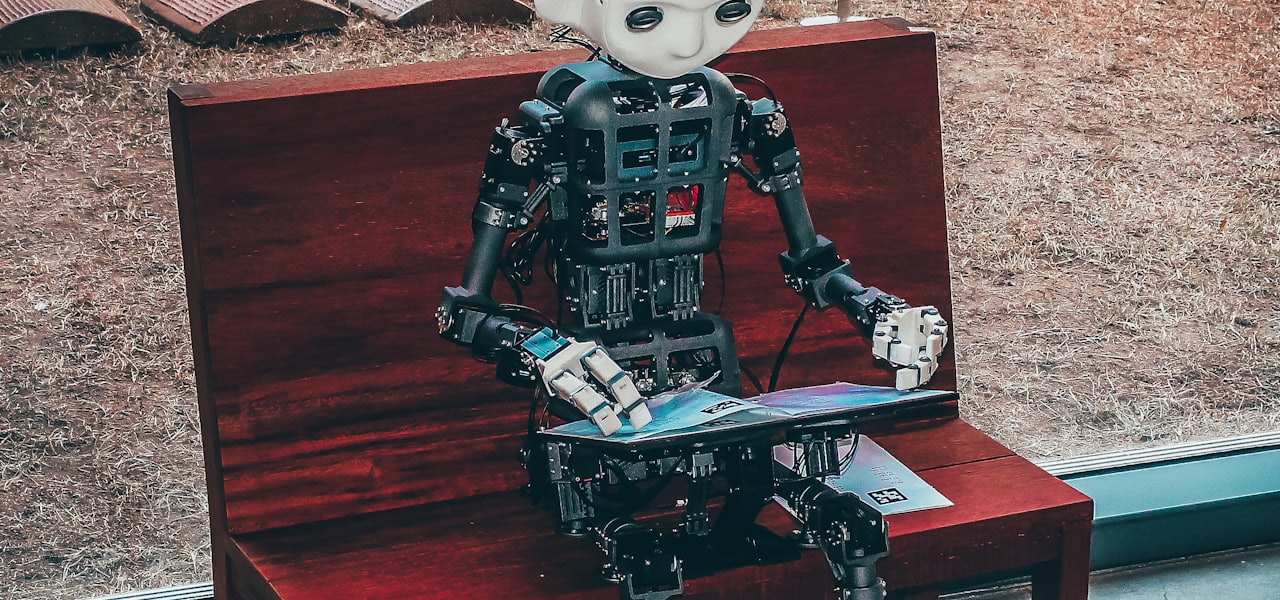
The constructive cooperative coevolutionary algorithm (also called C3) is a global optimisation algorithm in artificial intelligence based on the multi-start architecture of the greedy randomized adaptive search procedure (GRASP). It incorporates the existing cooperative coevolutionary algorithm (CC). The considered problem is decomposed into subproblems. These subproblems are optimised separately while exchanging information in order to solve the complete problem. An optimisation algorithm, usually but not necessarily an evolutionary algorithm, is embedded in C3 for optimising those subproblems. The nature of the embedded optimisation algorithm determines whether C3's behaviour is deterministic or stochastic. The C3 optimisation algorithm was originally designed for simulation-based optimisation but it can be used for global optimisation problems in general. Its strength over other optimisation algorithms, specifically cooperative coevolution, is that it is better able to handle non-separable optimisation problems. An improved version was proposed later, called the Improved Constructive Cooperative Coevolutionary Differential Evolution (C3iDE), which removes several limitations with the previous version. A novel element of C3iDE is the advanced initialisation of the subpopulations. C3iDE initially optimises the subpopulations in a partially co-adaptive fashion. During the initial optimisation of a subpopulation, only a subset of the other subcomponents is considered for the co-adaptation. This subset increases stepwise until all subcomponents are considered. This makes C3iDE very effective on large-scale global optimisation problems (up to 1000 dimensions) compared to cooperative coevolutionary algorithm (CC) and Differential evolution. The improved algorithm has then been adapted for multi-objective optimization. == Algorithm == As shown in the pseudo code below, an iteration of C3 exists of two phases. In Phase I, the constructive phase, a feasible solution for the entire problem is constructed in a stepwise manner. Considering a different subproblem in each step. After the final step, all subproblems are considered and a solution for the complete problem has been constructed. This constructed solution is then used as the initial solution in Phase II, the local improvement phase. The CC algorithm is employed to further optimise the constructed solution. A cycle of Phase II includes optimising the subproblems separately while keeping the parameters of the other subproblems fixed to a central blackboard solution. When this is done for each subproblem, the found solution are combined during a "collaboration" step, and the best one among the produced combinations becomes the blackboard solution for the next cycle. In the next cycle, the same is repeated. Phase II, and thereby the current iteration, are terminated when the search of the CC algorithm stagnates and no significantly better solutions are being found. Then, the next iteration is started. At the start of the next iteration, a new feasible solution is constructed, utilising solutions that were found during the Phase I of the previous iteration(s). This constructed solution is then used as the initial solution in Phase II in the same way as in the first iteration. This is repeated until one of the termination criteria for the optimisation is reached, e.g. a maximum number of evaluations. {Sphase1} ← ∅ while termination criteria not satisfied do if {Sphase1} = ∅ then {Sphase1} ← SubOpt(∅, 1) end if while pphase1 not completely constructed do pphase1 ← GetBest({Sphase1}) {Sphase1} ← SubOpt(pphase1, inext subproblem) end while pphase2 ← GetBest({Sphase1}) while not stagnate do {Sphase2} ← ∅ for each subproblem i do {Sphase2} ← SubOpt(pphase2,i) end for {Sphase2} ← Collab({Sphase2}) pphase2 ← GetBest({Sphase2}) end while end while == Multi-objective optimisation == The multi-objective version of the C3 algorithm is a Pareto-based algorithm which uses the same divide-and-conquer strategy as the single-objective C3 optimisation algorithm . The algorithm again starts with the advanced constructive initial optimisations of the subpopulations, considering an increasing subset of subproblems. The subset increases until the entire set of all subproblems is included. During these initial optimisations, the subpopulation of the latest included subproblem is evolved by a multi-objective evolutionary algorithm. For the fitness calculations of the members of the subpopulation, they are combined with a collaborator solution from each of the previously optimised subpopulations. Once all subproblems' subpopulations have been initially optimised, the multi-objective C3 optimisation algorithm continues to optimise each subproblem in a round-robin fashion, but now collaborator solutions from all other subproblems' subspopulations are combined with the member of the subpopulation that is being evaluated. The collaborator solution is selected randomly from the solutions that make up the Pareto-optimal front of the subpopulation. The fitness assignment to the collaborator solutions is done in an optimistic fashion (i.e. an "old" fitness value is replaced when the new one is better). == Applications == The constructive cooperative coevolution algorithm has been applied to different types of problems, e.g. a set of standard benchmark functions, optimisation of sheet metal press lines and interacting production stations. The C3 algorithm has been embedded with, amongst others, the differential evolution algorithm and the particle swarm optimiser for the subproblem optimisations.
AI agent
In the context of generative artificial intelligence, AI agents (also referred to as compound AI systems or agentic AI) are a class of intelligent agents that can pursue goals, use tools, and take actions with varying degrees of autonomy. In practice, they usually operate within human-defined objectives, constraints, and available tools. == Overview == AI agents possess several key attributes, including goal-directed behavior, natural language interfaces, the capacity to use external tools, and the ability to perform multi-step tasks. Their control flow is frequently driven by large language models (LLMs). Agent systems may also include memory components, planning logic, tool interfaces, and orchestration software for coordinating agent components. AI agents do not have a standard definition. NIST describes agentic AI as an emerging area requiring standards for secure operation, interoperability, and reliable interaction with external systems. A common application of AI agents is task automation: for example, booking travel plans based on a user's prompted request. Companies such as Google, Microsoft and Amazon Web Services have offered platforms for deploying pre-built AI agents. Several protocols have been proposed for standardizing inter-agent communication, with examples including the Model Context Protocol, Gibberlink, and many others. Some of these protocols are also used for connecting agents to external applications. In December 2025, Linux Foundation announced the formation of the Agentic AI Foundation (AAIF), with the goal of ensuring agentic AI evolves transparently and collaboratively. == History == AI agents have been traced back to research from the 1990s, with Harvard professor Milind Tambe noting that the definition of an AI agent was not clear at the time. Researcher Andrew Ng has been credited with spreading the term "agentic" to a wider audience in 2024. == Training and testing == Researchers have attempted to build world models and reinforcement learning environments to train or evaluate AI agents. For example, video games such as Minecraft and No Man's Sky as well as replicas of company websites, have also been used for training such agents. == Autonomous capabilities == The Financial Times compared the autonomy of AI agents to the SAE classification of self-driving cars, likening most applications to level 2 or level 3, with some achieving level 4 in highly specialized circumstances, and level 5 being theoretical. == Cognitive architecture == The following are some internal design options for reasoning within an agent: Retrieval-augmented generation ReAct (Reason + Act) pattern is an iterative process in which an AI agent alternates between reasoning and taking actions, receives observations from the environment or external tools, and integrates these observations into subsequent reasoning steps. Reflexion, which uses an LLM to create feedback on the agent's plan of action and stores that feedback in a memory cache. A tool/agent registry, for organizing software functions or other agents that the agent can use. One-shot model querying, which queries the model once to create the plan of action. === Reference architecture === Ken Huang proposed an AI agent reference architecture, which consists of seven interconnected layers, with each layer building on the functionality of the layers beneath it: Layer 1: Foundation models - provide the core AI engines to power agent capabilities. Layer 2: Data operations - manage the complex data infrastructure required for AI agent operations, including Vector database, data loaders, RAG. Layer 3: Agent frameworks - sophisticated software and tools that simplify the development and management of the AI agents. Layer 4: Deployment and infrastructure - provide the robust technical foundation for running AI agents. Layer 5: Evaluation and observability - focus on assessing the safety and performance of AI agents. Layer 6: Security and compliance - a crucial protective framework ensuring AI agents operate safely, securely, and conform to regulatory boundaries. At this layer security and compliance features embedded into all the AI agent stack layers are integrated together. Layer 7: Agent ecosystem - represents the AI agents' interface with real-world applications and users. == Orchestration patterns == To execute complex tasks, autonomous agents are often integrated with other agents or specialized tools. These configurations, known as orchestration patterns or workflows, include the following: Prompt chaining: A sequence where the output of one step serves as the input for the next. Routing: The classification of an input to direct it to a specialized downstream task or tool. Parallelization: The simultaneous execution of multiple tasks. Sequential processing: A fixed, linear progression of tasks through a predefined pipeline. Planner-critic: An iterative pattern where one agent generates a proposal and another evaluates it to provide feedback for refinement. == Multimodal AI agents == In addition to large language models (LLMs), vision-language models (VLMs) and multimodal foundation models can be used as the basis for agents. In September 2024, Allen Institute for AI released an open-source vision-language model. Nvidia released a framework for developers to use VLMs, LLMs and retrieval-augmented generation for building AI agents that can analyze images and videos, including video search and video summarization. Microsoft released a multimodal agent model – trained on images, video, software user interface interactions, and robotics data – that the company claimed can manipulate software and robots. == Applications == As of April 2025, per the Associated Press, there are few real-world applications of AI agents. As of June 2025, per Fortune, many companies are primarily experimenting with AI agents. The Information divided AI agents into seven archetypes: business-task agents, for acting within enterprise software; conversational agents, which act as chatbots for customer support; research agents, for querying and analyzing information (such as OpenAI Deep Research); analytics agents, for analyzing data to create reports; software developer or coding agents (such as Cursor); domain-specific agents, which include specific subject matter knowledge; and web browser agents (such as OpenAI Operator). By mid-2025, AI agents have been used in video game development, gambling (including sports betting), cryptocurrency wallets (including cryptocurrency trading and meme coins) and social media. In August 2025, New York Magazine described software development as the most definitive use case of AI agents. Likewise, by October 2025, noting a decline in expectations, The Information noted AI coding agents and customer support as the primary use cases by businesses. In November 2025, The Wall Street Journal reported that few companies that deployed AI agents have received a return on investment. === Applications in government === Several government bodies in the United States and United Kingdom have deployed or announced the deployment of agents, at the local and national level. The city of Kyle, Texas deployed an AI agent from Salesforce in March 2025 for 311 customer service. In November 2025, the Internal Revenue Service stated that it would use Agentforce, AI agents from Salesforce, for the Office of Chief Counsel, Taxpayer Advocate Services and the Office of Appeals. That same month, Staffordshire Police announced that they would trial Agentforce agents for handling non-emergency 101 calls in the United Kingdom starting in 2026. In December 2025, the Department of Neighborhoods in Detroit, Michigan, in partnership with a local business, deployed a pilot project in two Detroit districts for an AI agent to be used for customer service calls. In February 2025, Thomas Shedd, the director of the Technology Transformation Services, proposed using AI coding agents across the United States federal government. A recruiter for the Department of Government Efficiency proposed in April 2025 to use AI agents to automate the work of about 70,000 United States federal government employees, as part of a startup with funding from OpenAI and a partnership agreement with Palantir. This proposal was criticized by experts for its impracticality, if not impossibility, and the lack of corresponding widespread adoption by businesses. In December 2025, the Food and Drug Administration announced that it would offer "agentic AI capabilities" to its staff for "meeting management, pre-market reviews, review validation, post-market surveillance, inspections and compliance and administrative functions." That same month, the United States Department of Defense launched GenAI.mil, an internal platform for American military personnel to use generative AI-based applications based on Google Gemini, including "intelligent agentic workflows". Defense Secretary Pete Hegseth listed applications such as "[conducting] deep r
Carrier cloud
In cloud computing, a carrier cloud is a class of cloud that integrates wide area networks (WAN) and other attributes of communications service providers’ carrier-grade networks to enable the deployment of highly-complex applications in the cloud. In contrast, classic cloud computing focuses on the data center and does not address the network connecting data centers and cloud users. This may result in unpredictable response times and security issues when business-critical data are transferred over the Internet. == History == The advent of virtualization technology, cost-effective computing hardware, and ubiquitous Internet connectivity have enabled the first wave of cloud services starting in the early years of the 21st century. But many businesses and other organizations hesitated to move to more demanding applications, from on-premises dedicated hardware to private or public clouds. As a response, communications service providers started in the 2010/2011 time frame to develop carrier clouds that address perceived weaknesses in existing cloud services. Cited weaknesses vary but often include possible downtime, security issues, high cost of custom software and data transfer, inflexibility of some cloud apps, poor customer and nonfulfillment of service level agreements (SLAs). == Characteristics == To enable the deployment of time-sensitive and business critical applications in the cloud, the carrier cloud is designed to match or even exceed the characteristics of on-premises deployments. Therefore, the carrier cloud is characterized by some or all of the following items: Configurable, elastic network performance: Typical cloud computing solutions use the best effort of the public Internet to connect cloud users and data centers. This approach provides instant connectivity but does not offer control over network capacities, latencies, and jitter. Carrier clouds address these gaps with content delivery networks and/or dedicated virtual private networks (VPN) at OSI layers 1 (optical wavelengths), 2 (data link layer), and 3 (network layer). These VPNs can be configured to offer the desired performance parameters and exhibit the same type of elasticity for the network that regular clouds provide for servers and storage. To achieve the requested performance parameters, such as low latency, cloud applications can be (automatically) allocated to distributed data centers that are close enough to the cloud users. Automatic resource placement: For a cloud with multiple data centers, information about both the data center and the connecting network is relevant for a decision of where to place cloud images and storage volumes. For this decision, carrier clouds can obtain relevant information about the network, e.g., using the Application-Layer Traffic Optimization (ALTO) protocol. High level of security and governance: Cloud application providers are subject to general and domain specific security, privacy, and governance requirements and regulations, such as the European Data Protection Directive and the U.S. Health Insurance Portability and Accountability Act. For added security, the wide area network of the carrier cloud can provide segregated encrypted or unencrypted network links that are not accessible from the general Internet. At the data center, the carrier cloud provides e.g. virtual private servers, management processes, logs, and documentation to fulfill security and governance rules. Location control: Fundamentally, cloud users should not be concerned with the geographic location of their cloud resources. However, privacy and other regulations may mandate that certain types of data must not be sent outside a national jurisdiction or other geographical region. Open APIs: Carrier clouds provide graphical user interfaces and Web application programming interfaces that allow cloud application providers to set up, manage, and monitor both, the data center and the WAN, of their cloud services. == Architecture == Carrier clouds encompass data centers at different network tiers and wide area networks that connect multiple data centers to each other as well as to the cloud users. Links between data centers are used for failover, overflow, backup, and geographic diversity. Carrier clouds can be set up as public, private, or hybrid clouds. The carrier cloud federates these cloud entities by using a single management system to orchestrate, manage, and monitor data center and network resources as a single system.
Army Chief Information Officer/G-6
In September 2020, the Army realigned the previously consolidated CIO/G-6 function into two separate roles, Office of the Chief Information Officer and Deputy Chief of Staff, G-6, that report to the secretary of the Army and chief of staff of the Army, respectively. The realignment came after several months of planning and coordination. Lt. Gen. John Morrison was nominated to the Senate for promotion and assignment as the G-6 and confirmed, assuming that position in August 2020. Subsequently, the Secretary of the Army, Ryan McCarthy appointed Dr. Raj G. Iyer as the first civilian Chief Information Officer, a career Senior Executive Service position in November 2020. == G-6 == Advise chief of staff of the Army and the Chief Information Officer on planning, fielding, and execution of C4IT worldwide Army operations Develop and execute the plan for the Unified Network Implement Army information assurance Supervise C4IT, Signal support, Information security, Force structure and equipping activities in support of warfighting operations Oversee management of the Signal forces == Planned realignment == On June 11, 2020, the Army announced that the two roles of CIO and Deputy Chief of Staff, G-6 (DCS, G-6) would be realigned no later than August 31, 2020, with separate individuals responsible for each position. With the realignment: CIO core functions will be policy, governance, and oversight. Focus areas include: Information Environment, Cybersecurity, Enterprise Architecture, and Data Policy/Oversight/Governance, Enterprise Architecture, Enterprise Cloud Management and IT Spend/Category Management. DCS, G-6 core functions will be planning, strategy, and implementation. Focus areas include: Information Environment/Network, Planning and Integration, Theater Synchronization, Architecture Integration, Enterprise Information Environment (EIE) Mission Area Portfolio Management and Mission Decision Packet Management. In order to support multi-domain operations, the Army will have to connect Enterprise networks and tactical networks. —LTG Morrison, DCS, G-6 DCS G-6 released the Army Unified Network Plan under the Army Digital Transformation Strategy, to help the Army to establish a Multi-Domain Operations capable force by 2028. The Unified Network will enable Army formations, as part of the Joint Force, to operate in highly contested and congested operational environments with the speed and global range to achieve decision dominance and maintain overmatch. The plan shapes, synchronizes, integrates and governs Unified Network efforts and aligns the personnel, organizational structure and capabilities required to enable MDO at all echelons. == Chief signal officers and their successors == Chief signal officers (1860–1964) Maj. Albert J. Myer 1860–1863 Lt. Col. William J. L. Nicodemus 1863–1864 Col. Benjamin F. Fisher 1864–1866 Col. Albert J. Myer 1866–1880 (promoted to brigadier general 16 June 1880) Brig. Gen. William B. Hazen 1880–1887 Brig. Gen. Adolphus W. Greely 1887–1906 Brig. Gen. James Allen 1906–1913 Brig. Gen. George P. Scriven 1913–1917 Brig. Gen. George O. Squier 1917–1923 (promoted to major general 6 October 1917) Maj. Gen. Charles McK. Saltzman 1924–1928 Maj. Gen. George Sabin Gibbs 1928–1931 Maj. Gen. Irving J. Carr 1931–1934 Maj. Gen. James B. Allison 1935–1937 Maj. Gen. Joseph O. Mauborgne 1937–1941 Maj. Gen. Dawson Olmstead 1941–1943 Maj. Gen. Harry C. Ingles 1943–1947 Maj. Gen. Spencer B. Akin 1947–1951 Maj. Gen. George I. Back 1951–1955 Lt. Gen. James D. O’Connell 1955–1959 Maj. Gen. Ralph T. Nelson 1959–1962 Maj. Gen. Earle F. Cook 1962–1963 Maj. Gen. David Parker Gibbs 1963–1964 Chiefs of communications-electronics (1964–1967) Maj. Gen. David Parker Gibbs 1964–1966 Maj. Gen. Walter E. Lotz, Jr. 1966–1967 Assistant chiefs of staff for communications-electronics (1967–1974) Maj. Gen. Walter E. Lotz, Jr. 1967–1968 Maj. Gen. George E. Pickett 1968–1972 Lt. Gen. Thomas Rienzi 1972–1974 Directors of telecommunications and command and control (1974–1978) (a directorate of ODCSOPS) Lt. Gen. Thomas Rienzi 1974–1977 Lt. Gen. Charles R. Myer 1977–1978 Assistant chiefs of staff for automation and communications (1978–1981) Lt. Gen. Charles R. Myer 1978–1979 Maj. Gen. Clay T. Buckingham 1979–1981 Assistant deputy chiefs of staff for operations and plans (command, control, communications, and computers) (1981–1984) Maj. Gen. Clay T. Buckingham 1981–1982 Maj. Gen. James M. Rockwell 1982–1984 Assistant chiefs of staff for information management (1984–1987) Lt. Gen. David K. Doyle 1984–1986 Lt. Gen. Thurman D. Rodgers 1986–1987 Directors of information systems for command, control, communications, and computers Lt. Gen. Thurman D. Rodgers 1987–1988 Lt. Gen. Bruce R. Harris 1988–1990 Lt. Gen. Jerome B. Hilmes 1990–1992 Lt. Gen. Peter A. Kind 1992–1994 Lt. Gen. Otto J. Guenther 1995–1997 Lt. Gen. William H. Campbell Chief Information Officer, Military Deputy to the Army Acquisition Executive, and Director of Information Systems for Command, Control, Communications and Computers Lt. Gen. William H. Campbell 1997–2000
Deep image compositing
Deep image compositing is a way of compositing and rendering digital images that emerged in the mid-2010s. In addition to the usual color and opacity channels a notion of spatial depth is created. This allows multiple samples in the depth of the image to make up the final resulting color. This technique produces high quality results and removes artifacts around edges that could not be dealt with otherwise. == Deep data == Deep data is encoded by advanced 3D renderers into an image that samples information about the path each rendered pixel takes along the z axis extending outward from the virtual camera through space, including the color and opacity of every non-opaque surface or volume it passes through along the way, as well as neighboring samples. It might be considered somewhat analogous to the way ray tracing generates simulated photon paths through such mediums; however, ray tracing and other traditional rendering techniques generally produce images that contain only three or four channels of color and opacity values per pixel, flattened into a two dimensional frame. Depth maps, on the other hand, contain z axis information encoded in a grayscale image. Each level of gray represents a different slice of the z space. The "thickness" of each slice is determined at time of render, allowing for more or less depth fidelity depending on how deep the scene is. Depth maps have been a boon to compositors for blending 3D renders with live action and practical elements. To be useful, the map must have high enough bit depth to encode separation between close-to-camera objects and objects near infinity. Most 3D software packages are now capable of generating 16-bit and 32-bit depth maps, providing up to 2 billion depth levels. Depth maps do not however include transparency information about non-opaque surfaces or volumes and as such, objects beyond and viewed through these semi- or fully-transparent objects will have no depth information of their own and may not get composited or blurred correctly. Even the popular addition of cryptomattes to many post-production and VFX studios' pipelines, while providing separate color-coded ID shapes for individual elements in a rendered scene to further bridge the gap between CGI and compositing, don't allow for the nearly automated and fully non-linear workflows that deep data does. This is because deep images encapsulate enough 3D information that normally time-intensive tasks such as rotoscoping with numerous holdout mattes for complex interactions between moving characters and semi-transparent environmental volumes like smoke or water, are essentially trivial. Instead of going through that process, multiple mattes could easily be generated from a single set of deep images with no need to re-render every matte element and background for each case. In addition to that efficiency and flexibility, deep data images inherently provide much higher visual quality in common areas that have been difficult with traditional renders, such as the motion-blurred edges of characters with semi-transparent elements like hair. One downside to the use of deep images is their substantial file size, since they encode a relatively enormous amount of data per frame compared to even multichannel formats such as OpenEXR. === Function-based (integrated) === The data is stored as a function of depth. This results in a function curve that can be used to look up the data at any arbitrary depth. Manipulating the data is harder. === Sample-based (deintegrated) === Each sample is considered as an independent piece and can so be manipulated easily. To make sure the data is representing the right detail, an additional expand value needs to be introduced. == Generating deep data == 3D renderers produce the necessary data as a part of the rendering pipeline. Samples are gathered in depth and then combined. The deep data can be written out before this happens and so is nothing new to the process. Generating deep data from camera data needs a proper depth map. This is used in a couple of cases but still not accurate enough for detailed representation. For basic holdout task this can be sufficient though. == Compositing deep data images == Deep images can be composited like regular images. The depth component makes it easier to determine the layering order. Traditionally this had to be input by the user. Deep images have that information for themselves and need no user input. Edge artifacts are reduced as transparent pixels have more data to work with. == History == Deep Images have been around in 3D rendering packages for quite a while now. The use of them for holdouts was first done at several VFX houses in shaders. Holdout mattes can be generated at render time. Using them in a more interactive manner was started recently by several companies, SideFX integrated it in their Houdini software and facilities like Industrial Light & Magic, DreamWorks Animation, Weta, AnimalLogic and DRD studios have implemented interactive solutions. In 2014 the Academy of Motion Picture Arts and Sciences honored the technology with its annual SciTech awards. Dr. Peter Hillman for the long-term development and continued advancement of innovative, robust and complete toolsets for deep compositing and to Colin Doncaster, Johannes Saam, Areito Echevarria, Janne Kontkanen and Chris Cooper for the development, prototyping and promotion of technologies and workflows for deep compositing. == Resources == Pixar Paper Deep Image Paper Video tutorial of Deep Imaging as used on 2012 film Rise of the Planet of the Apes, Nuke compositing software Deep Compositing Course Deep Image File Format at Google Code Academy Award for the Technology Theory of Deep Pixels OpenEXR Deep Pixels
Dabbler
Dabbler is natural media drawing software for beginners. It was initially developed by Fractal Design Corporation. It is a simplified version of Fractal Design Painter, and included multimedia tutorials and a fullscreen interface. Dabbler was released as "Art Dabbler" after the MetaCreations merger, and rights were eventually transferred to Corel. Dabbler operating systems are Mac OS and Microsoft Windows.
Ampere Computing
Ampere Computing LLC is an American fabless semiconductor company that designs ARM-based central processing units (CPUs) with high core counts for use in cloud computing and data center environments. Founded in 2017 by former Intel president Renée James, the company is headquartered in Santa Clara, California, and operates as an independent subsidiary of SoftBank Group since November 2025. == History == Ampere Computing was founded in fall 2017 by Renée James, ex-President of Intel, with funding from The Carlyle Group. James acquired a team from MACOM Technology Solutions (formerly AppliedMicro) in addition to several industry hires to start the company. Ampere Computing is an ARM architecture licensee and develops its own server microprocessors. Ampere fabricates its products at TSMC. In April 2019, Ampere announced its second major investment round, including investment from Arm Holdings and Oracle Corporation. In June 2019, Nvidia announced a partnership with Ampere to bring support for Compute Unified Device Architecture (CUDA). In November 2019, Nvidia announced a reference design platform for graphics processing unit (GPU)-accelerated ARM-based servers including Ampere. In the first half of 2020, Ampere announced Ampere Altra, an 80-core processor, and Ampere Altra Max, a 128-core processor, without the use of simultaneous multithreading. In March 2020, the company announced a partnership with Oracle. In September 2020, Oracle said it would launch bare-metal and virtual machine instances in early 2021 based on Ampere Altra. In November 2020, Ampere was named one of the top 10 hottest semiconductor startups by CRN. In May 2021, the company announced a partnership with Microsoft. In April 2022, Ampere said that it had filed a confidential prospectus with the U.S. Securities and Exchange Commission, signaling its intent to go public. In June 2022, HPE announced their Gen11 ProLiant system would use Ampere Altra and Ampere Altra Max Cloud Native Processors. In July 2022, Google announced T2A instances using Ampere Altra in the Google cloud and in August 2022 Microsoft announced their instances of Ampere running in Azure. On March 19, 2025, investment holding company SoftBank Group announced it will acquire Ampere Computing for $6.5 billion. The deal finalized in November 2025, with Ampere remaining as an independent subsidiary with its headquarters in Santa Clara, California. == Products == Ampere develops ARM-based computer processors and CPU cores under their Altra brands. These are used in databases, media encoding, web services, network acceleration, mobile gaming, AI inference processing, and other applications and programs that need to scale. On February 5, 2018, Ampere announced the eMAG 8180 featuring 32x Skylark cores fabricated on TSMC's 16FF+ process. It supports a turbo of up to 3.3 GHz with a TDP of 125 W, 8ch 64-bit DDR4, up to 1 TB DDR4 per socket, and 42x PCIe 3.0 Lanes. The Skylark cores were based on AppliedMicro's X-Gene 3. Packet offers servers with the eMAG 8180 and 128 GB DRAM, 480 GB SSD, and 2x 10 Gbit/s networking. On September 19, 2018, Ampere announced the availability of a version featuring 16x Skylark cores. === 2020 === On March 3, 2020, Ampere announced the Ampere Altra featuring 80 cores fabricated on TSMC's N7 process for hyperscale computing. It was the first server-grade processor to include 80 cores and the Q80-30 conserves power by running at 161 W in use. The cores are semi-custom Arm Neoverse N1 cores with Ampere modifications. It supports a frequency of up to 3.3 GHz with TDP of 250 W, 8ch 72-bit DDR4, up to 4 TB DDR4-3200 per socket, 128x PCIe 4.0 Lanes, 1 MB L2 per core and 32 MB SLC. Ampere also announced their roadmap with Ampere Altra Max (2021) in development and AmpereOne (2022) defined. === 2021 === The 128-core Altra Max was released in 2021 and targeted hyperscale cloud providers. It uses the same server socket and platforms as Ampere Altra, and both products have one thread per core. The Altra Max CPUs provide 128 Arm v8.2+ cores per chip and run up to 3.0 GHz. They also support eight channels of DDR4-3200 memory and 128 lanes of PCIe Gen4. Also in 2021, Oracle launched its Oracle Cloud Infrastructure (OCI) using Ampere Altra processors. === 2022 === In February 2022, Ampere and Rigetti Computing announced a strategic partnership to create hybrid quantum-classical computers. The companies will combine Ampere's Altra Max CPUs with Rigetti's Quantum Processing Units (QPU) in cloud-based High-Performance Computing (HPC) environments. In April, Microsoft previewed its Azure Virtual Machines running on the Ampere Altra. The VMs run scale-out workloads, web servers, application servers, open source databases, cloud native .NET applications, Java applications, gaming servers, media servers, and other processes. In May, Ampere announced the sampling of AmpereOne CPUs, 5 nanometer chips based on its in-house Ampere-developed core. AmpereOne will add support for DDR5 main memory and PCIe Gen5 peripherals. On June 28, 2022, HPE became first tier-one server provider to offer compute with optimized cloud-native silicon for service providers and enterprises embracing cloud-native development with new line of HPE ProLiant RL Gen11 servers, using Ampere® Altra® and Ampere® Altra® Max processors, delivering high performance and power efficiency. === 2023 === During April 2023, Ampere released the Altra developer's kit, an IoT Prototype Kit based on Ampere Altra, aimed at cloud developers, available in 32-core, 64-core, and 80-core formats. === 2024 === In May 2024, Ampere updated its AmpereOne roadmap to 256 cores and announced a joint effort with Qualcomm on CPUs and accelerators. == Customers == Ampere's customers include Microsoft Azure, Tencent Cloud, Oracle, ByteDance, Hewlett Packard Enterprise (HPE), Cloudflare, Equinix, Kingsoft Cloud, Meituan, Scaleway, UCloud, Foxconn Industrial Internet, Gigabyte, Inspur, Cruise, Hetzner, Project Ronin, Wiwynn and Google Cloud Platform Cruise uses an Ampere Altra variant for its autonomous driving unit. The CPU was selected because of its throughput and low power consumption. In 2021, Oracle, Microsoft, Tencent, and ByteDance committed to using Ampere's customized chips, first announced in May. In April 2022, Microsoft previewed Ampere Altra processors in its new Azure D-and E- series virtual machines. The Dpsv5 series is built for Linux enterprise application types, and the Epsv5 series is for memory-intensive Linux workloads. They provide up to 64 vCPUs, include VM sizes with 2GiB, 4GiB, and 8GiB per vCPU memory configurations, up to 40 Gbit/s networking, and high-performance local SSD storage. In 2022, Microsoft's Ampere Altra-based Azure servers became the first cloud solution provider server to be Arm SystemReady SR certified. The Azure VMs, powered by Altra processors, were also the first to be SystemReady Virtual Environment standard certified. SystemReady defines a set of firmware and hardware standards as a baseline for system development for software developers, original equipment vendors, and chipmakers.